

School transportation remains one of the most complex and essential functions within any school district. It has to be safe, efficient, reliable and adaptable; all at the same time, every single day.
But behind those logistics is something more important: students. Students who experience transportation in different ways depending on their needs, their environment and the type of vehicle they ride in.
As districts rethink how to better support every student, school vans are becoming a key part of a more flexible transportation strategy. Not as a replacement for traditional buses, but as a way to better serve students whose needs fall outside a one-size-fits-all model.
Why School Transportation Needs Have Become More Complex
Across the United States, more than 25 million students ride school buses every day, making student transportation one of the largest coordinated mobility systems in the country. Within that system, school districts are serving a broader range of student needs than ever before, and transportation systems are evolving to keep pace.
Between shifting enrollment patterns, staffing shortages, evolving accessibility requirements and increasing expectations for efficiency, many districts are being asked to do more with fewer flexible options. At the same time, student needs are not uniform, and transportation systems must account for differences in mobility and daily travel conditions.
Traditional large bus fleets continue to play a vital role in school transportation. However, they are not always the most effective solution for every route or every student group. In many districts, there are gaps where a different type of vehicle or configuration could better match the operational need.
This is where school vans are becoming part of the conversation. They offer districts an additional layer of flexibility, helping transportation teams better align vehicle type with actual route demands and student needs.
Accessibility Works Best When It Is Built In From the Start
As school districts evaluate transportation systems, accessibility is increasingly viewed as a core design principle rather than a separate requirement. This shift is especially important given that about 15% of K-12 students in the United States have a disability, many of whom rely on school transportation as their primary way to get to and from school each day.
When accessibility is considered from the beginning, it creates a more consistent experience for students and a more efficient system for transportation teams. Instead of managing multiple disconnected solutions, districts can build a unified system that supports a wide range of student needs.
Well-designed transportation systems support:
- Smoother and more predictable boarding
- Safer loading and unloading
- More consistent ride experiences
- Easier daily operations for staff
School vans help districts integrate accessibility more naturally into fleet planning and daily routing. Instead of managing accessibility as a separate system, it becomes part of how transportation operates every day.
School Van Solutions That Support Flexible Transportation Programs
As transportation demands evolve, many school districts are making practical adjustments to how their fleets are structured and deployed. Rather than relying on static fleet models, school leaders are evaluating how well their transportation systems perform across a range of real-world conditions.
Key considerations often include:
- How adaptable the current fleet is across different route types
- Whether existing vehicles meet the full range of student needs
- Where school vans can improve coverage, efficiency or routing flexibility
- How to better support drivers and transportation staff in daily operations
While school buses continue to serve as the foundation of student transportation, programs are further supported by additional vehicle types that provide flexibility for specific routes and needs.
Smaller Capacity School Vans
Smaller capacity vehicles are often used for routes that do not require full-size buses, helping districts improve efficiency while maintaining reliable service.
These vehicles are commonly used for:
- Specialized education routes
- Smaller student groups
- Rural or low-density areas
- Routes with variable daily demand
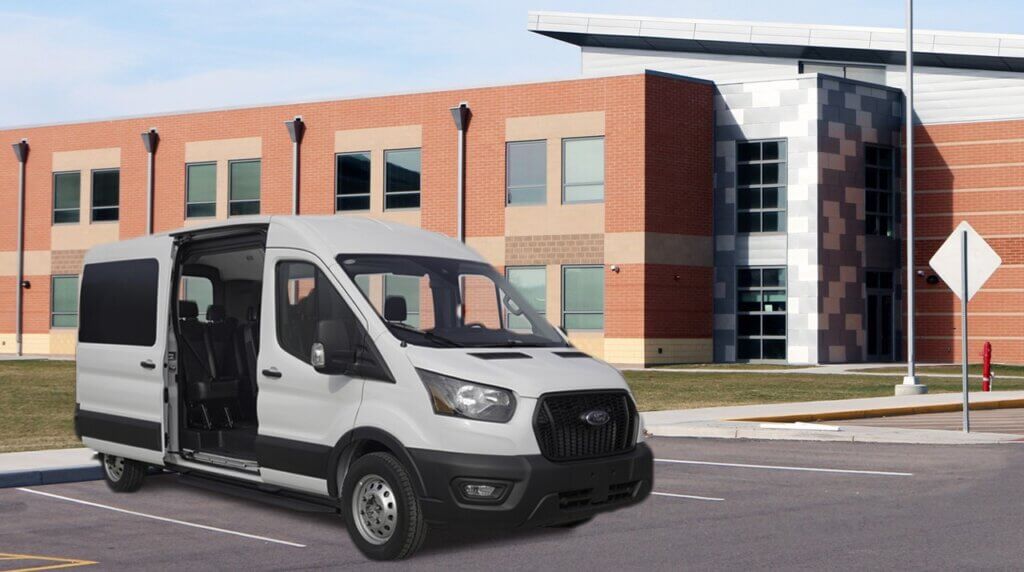
They can also help transportation teams create more flexible scheduling options and reduce unnecessary strain on larger fleet assets. In this category, the 10-passenger Ford Transit School Van allows districts to match vehicle size to route requirements while maintaining safety and durability standards.
Accessible Mobility Vans
These vehicles are designed to support students with mobility needs while maintaining flexibility for drivers, aides and transportation staff. Depending on configuration, they can accommodate a combination of wheelchair users and ambulatory passengers within the same vehicle, helping districts maintain inclusive transportation without isolating riders into separate fleets.
One example of this type of solution is the ADA-compliant Chrysler Pacifica and Voyager Flex6. Its rear-entry design and FlexFlat ramp system allow operators to quickly adapt the interior layout, supporting either ambulatory seating, wheelchair securement or a combination of both depending on daily needs.
Full-Size Mobility Vans
Full-size mobility solutions are designed for districts that need greater passenger capacity while still maintaining flexibility for accessibility configurations.
These vehicles are commonly used for:
- Mixed mobility transportation needs
- Higher-capacity accessible routes
- Specialized program transportation
- Daily operations requiring adaptable seating layouts
These vans allow districts to maintain operational flexibility while supporting a wide range of accessibility and routing requirements.
Student Experience Is Shaping the Future of Transportation
Transportation is no longer viewed purely as a logistical function. Districts are recognizing it as part of the overall student experience and a daily touchpoint that can influence how students begin and end their school day.
While efficiency and compliance remain essential, more attention is being placed on the conditions students experience during the ride itself. Small but important factors can shape that experience, including:
- Comfort during transit
- Predictability of the daily ride
- Ease of entry and exit
- Overall ride quality
When these elements are consistent, transportation becomes easier for students to navigate and more reliable for families and staff managing daily operations. Purpose-built school vans can support a more controlled and consistent environment for students who benefit from smaller, more structured transportation settings.
Moving Toward School Vans That Serve Every Student
Creating transportation systems that effectively serve every student starts with intentional planning and the right mix of vehicle solutions. No single vehicle type can meet every transportation need across a district. As student populations, route demands and accessibility requirements continue to evolve, school vans are central in building more flexible and responsive transportation systems.
Driverge partners with school districts and transportation providers to design and deliver school van solutions that support accessibility, efficiency and long-term operational needs. To learn more about available school transportation vans or to speak with a Driverge transportation specialist, contact our team and explore solutions tailored to your district.